Hoi An - Ancient Town
On the afternoon of our third day in Saigon, we flew to Da Nang and were transported by bus
to the next city on our itinerary, Hoi An.
Our guides in Cambodia and Vietnam had both told us that there was no need to tip the bus drivers
or any of the hotel staff because Intrepid gives them a tip from the entire group. As Americans,
however, it just didn't feel right not to give a little something to the friendly porter who rushed
forward to help us take our luggage to our room, and from that moment on the man was devoted. If Walt
stepped outside for a cigarette, he would offer to light it and to bring Walt a glass of water.
When we returned to the hotel one night in a taxi, he hurried out to help us disembark and climb
the steps. Whenever we were in the lobby, he was never far away, always watching, ready to be of
service. It was all a bit unsettling to Walt who becomes irritated if I offer to bring him a cup of
coffee in the morning.
Other than the discomfort of being served, we enjoyed our time in this colorful town. On our first
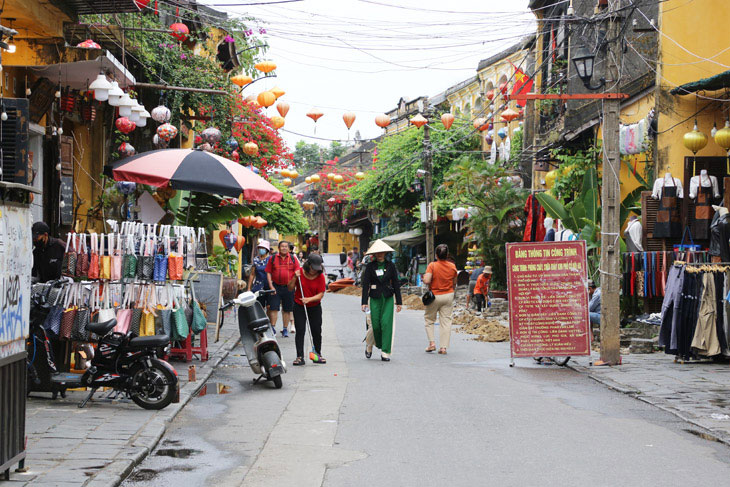
morning there, Fun led us from the hotel to the old town area which was several blocks away. It might
have been a pleasant walk, but we often had to step into the street because the sidewalk was blocked
with parked motorbikes. This put us in the path of the moving motorbikes, which I found unnerving.
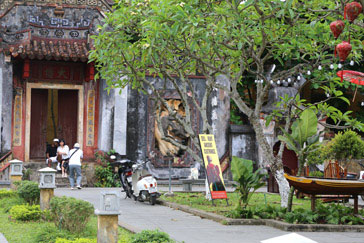
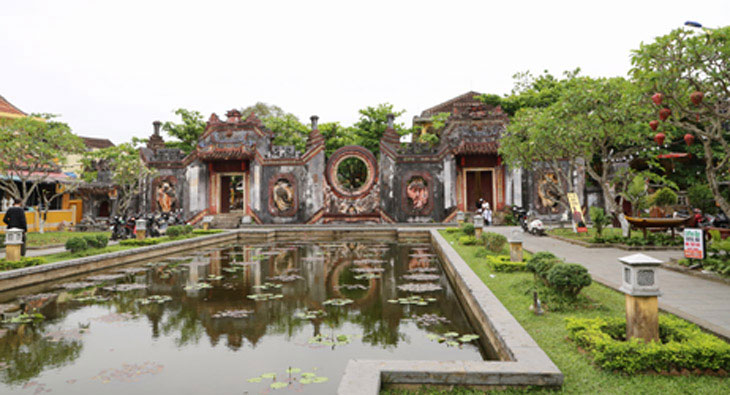
Finally we arrived in a courtyard and marveled at the buildings around us.
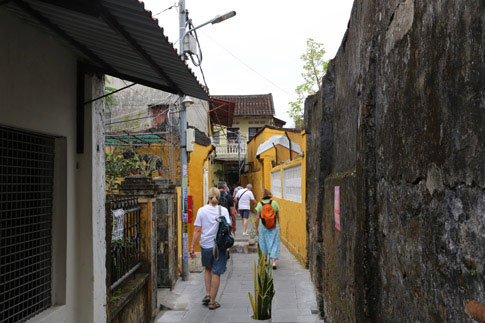
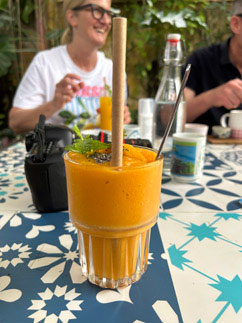
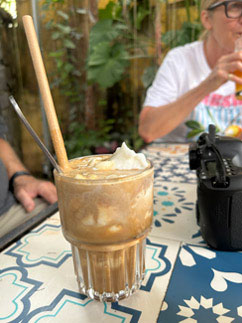
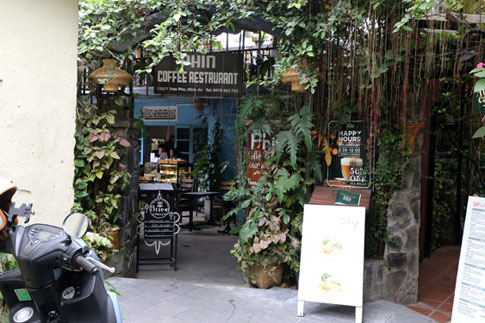
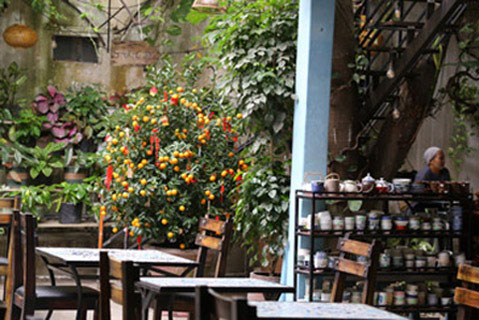
Then we wandered through a maze of narrow back lanes to a charming coffee shop where we enjoyed
aome icy drinks
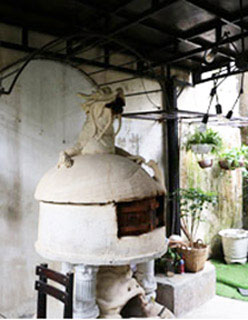
The owner of the coffee shop built the dragon topped smoker during the COVID pandemic to keep
himself busy.
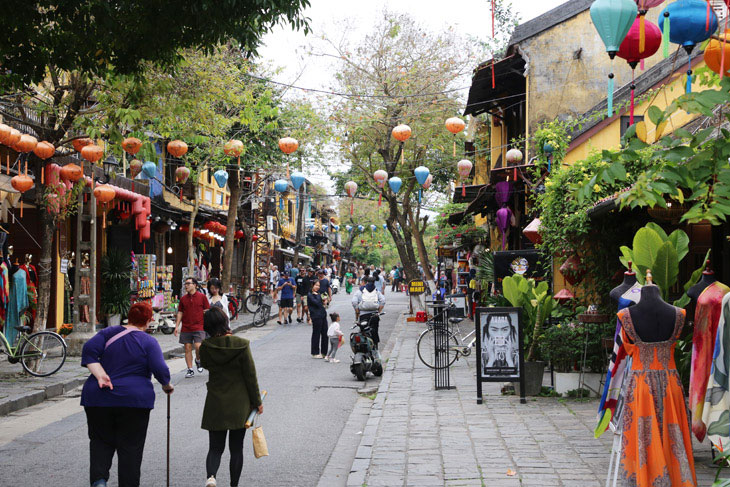
We had some free time to roam the streets. I was anxious to buy some small souveniers, but I found
it very difficult to shop in Vietnam. Items for sale are rarely marked with prices, and the moment
you stop to look at something that catches your eye, the shopkeeper descends on you and starts trying
to convince you to buy it. If you say "no", you will be encouraged to buy something else in the shop.
Fun had told us that haggling over the price is expected and that it can be an amusing activity, but
I am absolutely not good at it. I did finally manage to buy 3 paper lanterns. The shopkeeper told me
they were 200,000 dong each (about $8). I selected 2, and then she offered to sell me 3 for 500,000
dong. I interpreted this as an indication that she felt bad that I was paying far too much for the
lanterns, but maybe she was just trying to reduce her inventory.
Hoi An is known as a good place to have clothing made and to purchase prescription glasses so some
members of the group took advantage of this opportunity. Later that evening, the items they selected
were delivered to their hotel rooms.
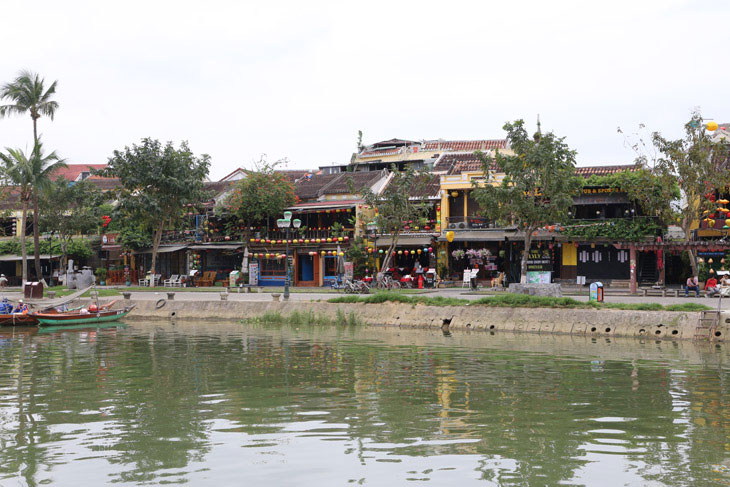
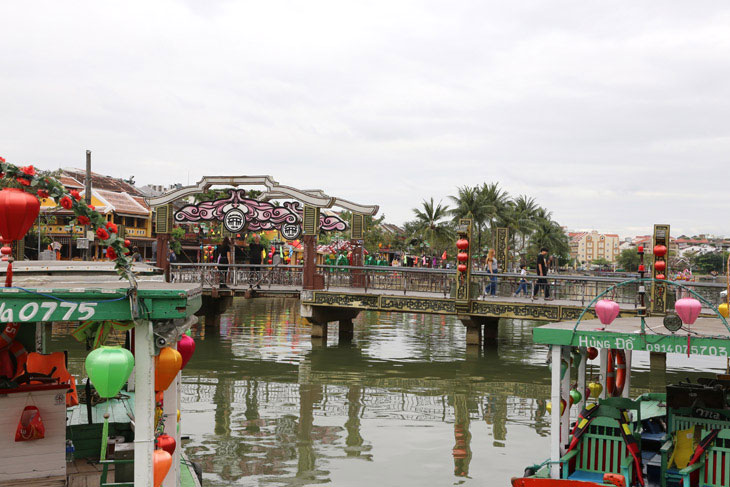
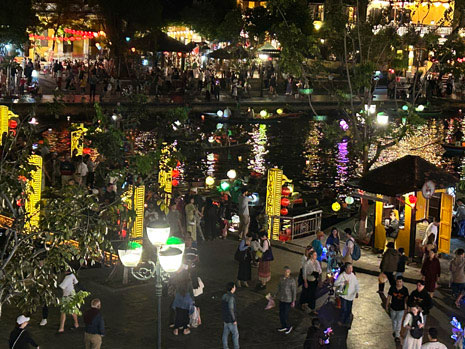
Walt and I wandered down to the river.
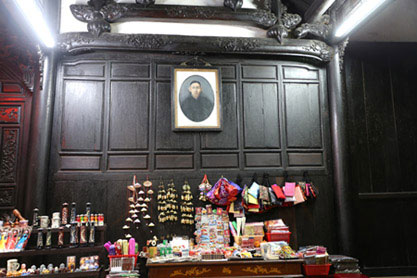
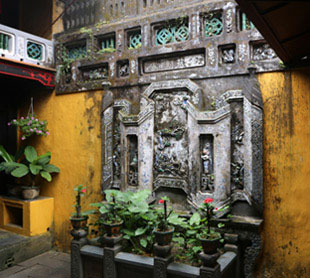
Several of the buildings in the town are preserved so tourists can see what life was like back in
the 15th - 19th Centuries when the town was an active port. We visited a merchant's house.
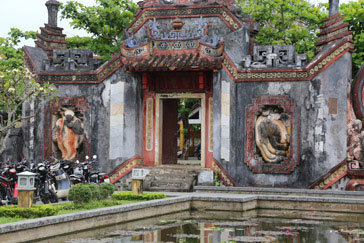
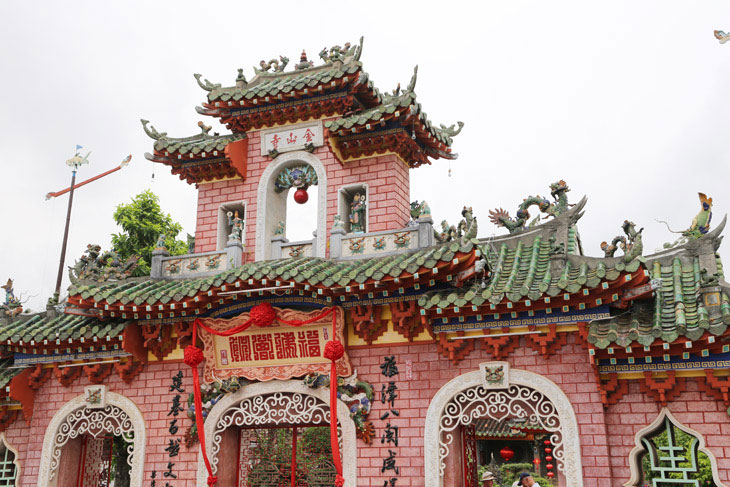
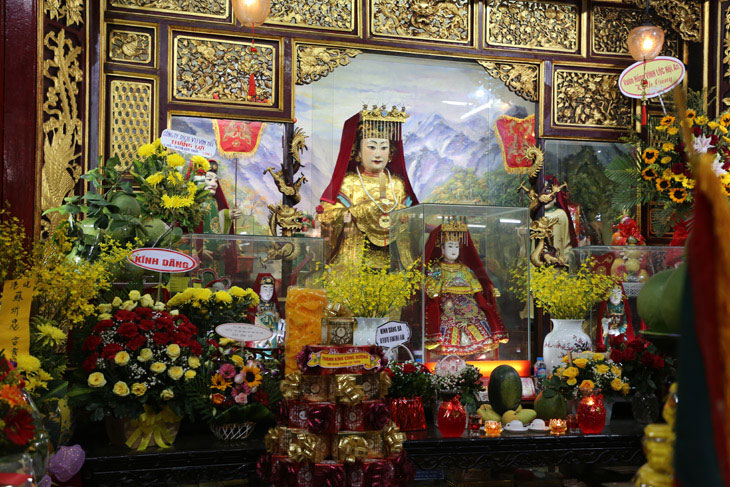
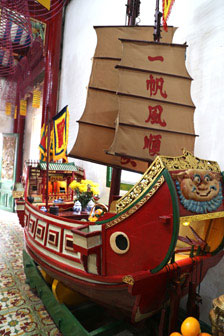
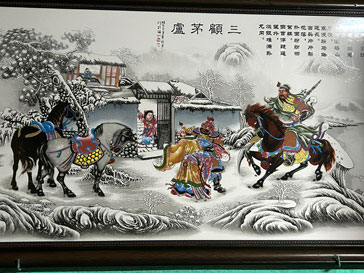
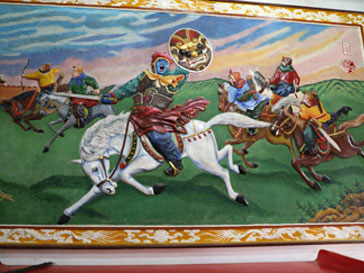
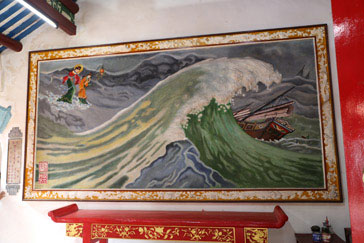
We also wandered through the Fujian Assembly Hall which was established by Chinese settlers from
a coastal province in Southern China who migrated to Hoi An after the Ming Dynasty collapsed.
The temple is devoted to the worship of the Fujian ancestors and to Thien Hau, a Chinese sea
goddess who blesses sailors with safe ocean travel.
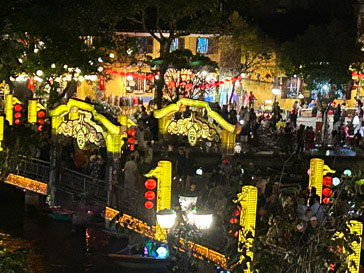
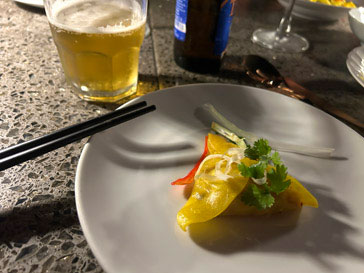
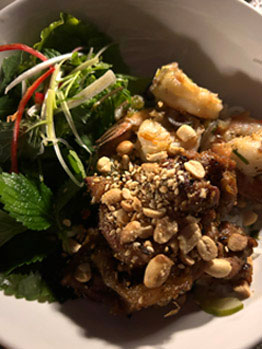
After dark, we returned to the old town and enjoyed dinner at a rooftop restaurant where
we could enjoy a lovely view of the joyous chaos on the streets below.
It was good to be away from the insanity of Ho Chi Minh City, but there were still far too many
motorbikes and pedicabs for me.