Childhood Dreams
Siem Reap - Angkor Wat, Angkor Thom
The two remaining days of our tour would be spent visiting Angkor Archaelogical Park so
the next morning Ly hustled us onto the bus a bit earlier than usual and advised us to bring
plenty of water. We would begin by visiting the main temple, Angkor Wat. We disembarked in a
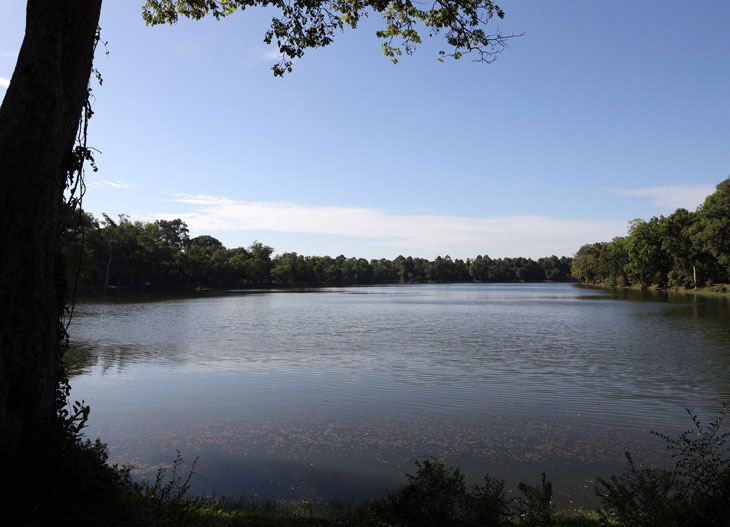
forested area and began walking. The first point of interest we came across was this reservoir.
It was once part of the complex irrigation system which supported the two million people who
lived in the area between the 9th and the 13th centuries.
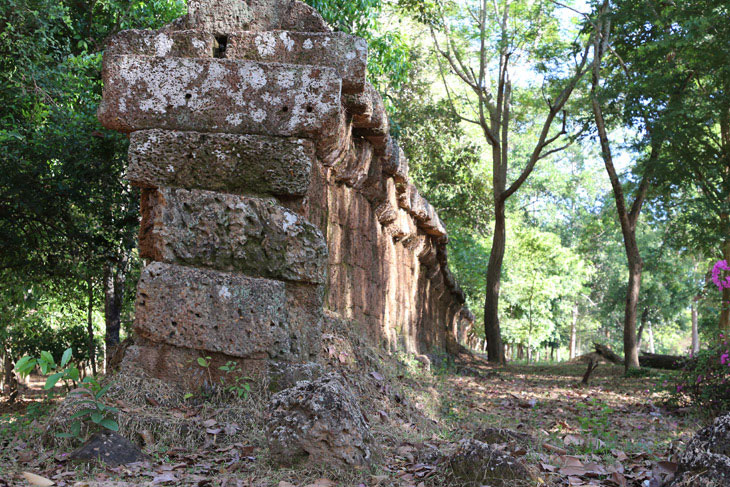
We wandered on past the ruins of this small temple and a long stone wall.
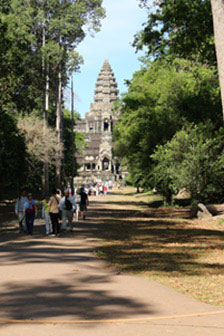
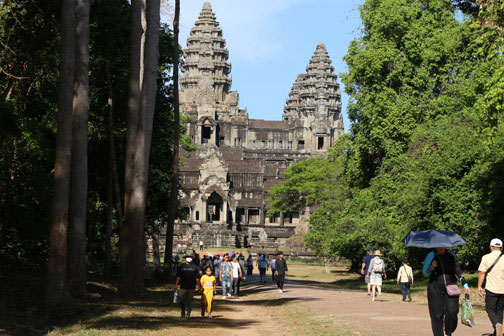
Our walk continued down a long, wide path through the trees, and slowly the impressive ruins came
into view.
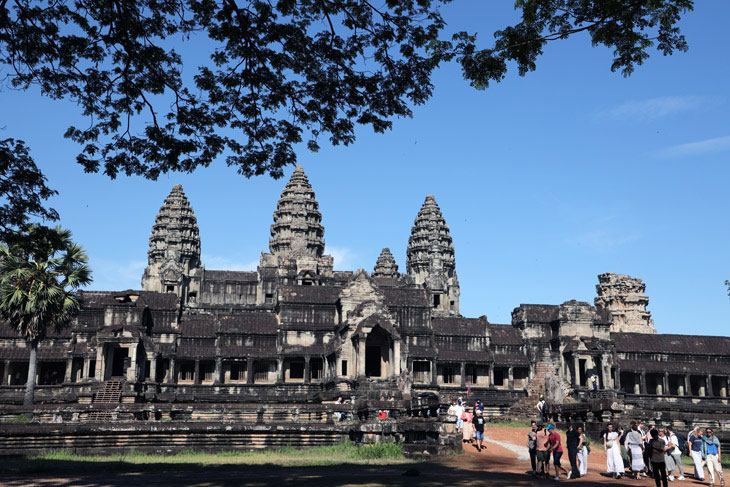
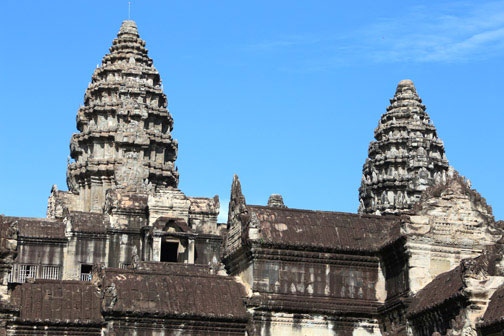
Angkor Wat is one of the largest religious structures in the world. It was built in the 12th
century and dedicated to the Hindu god Vishnu, but before the century ended it was transformed
from a Hindu to a Buddhist temple.
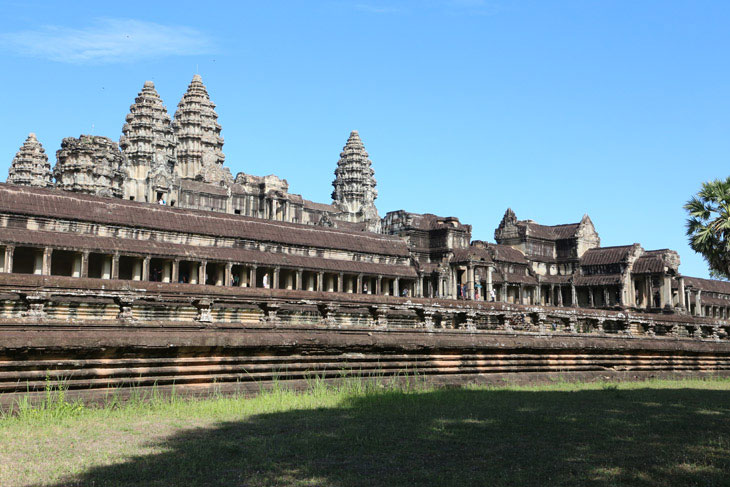
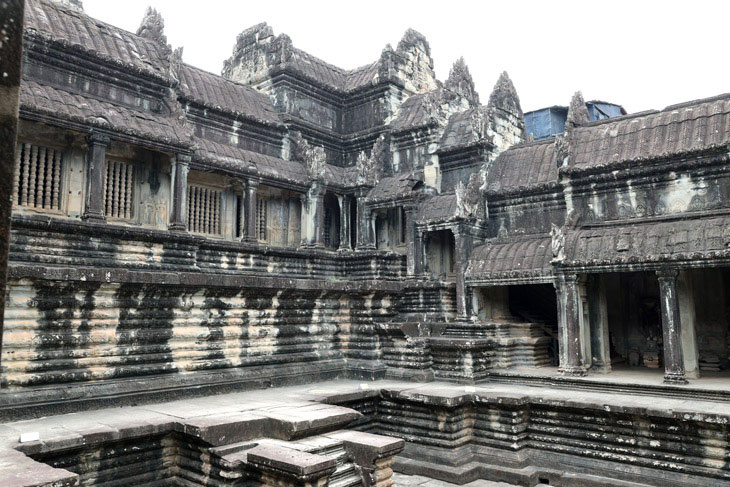
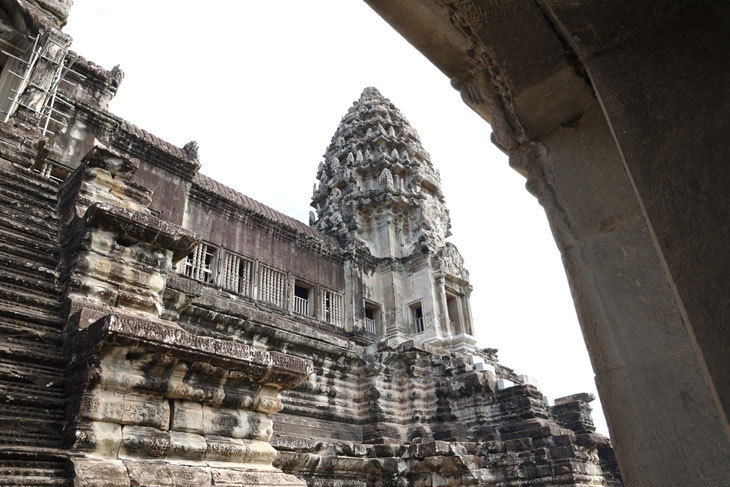
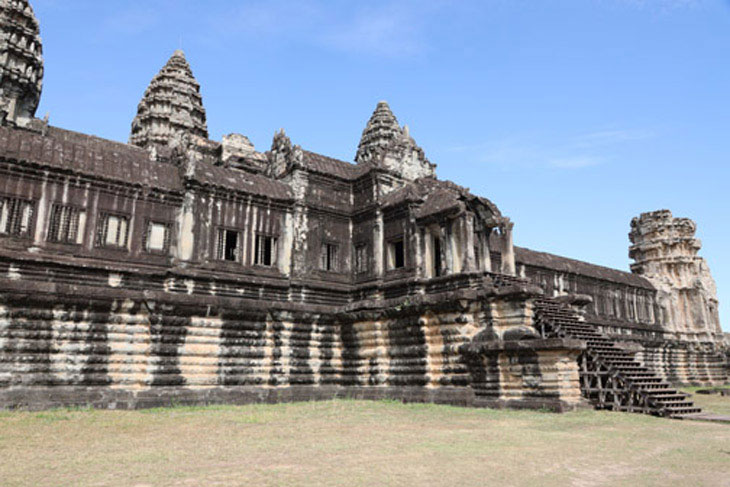
We walked around to the side of the immense structure.
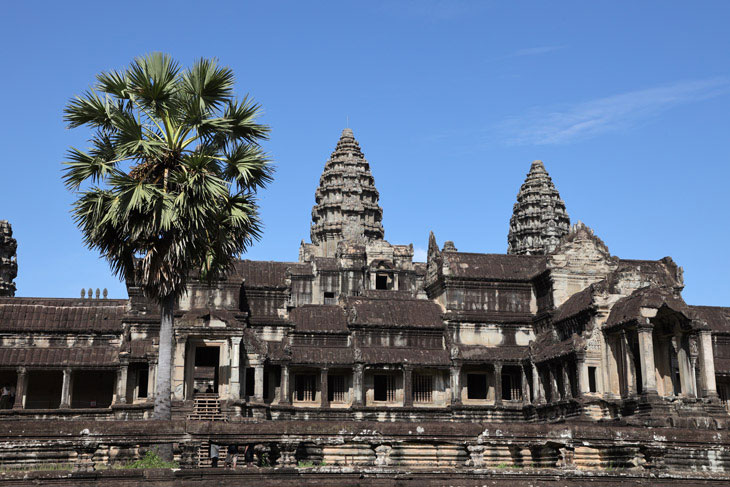
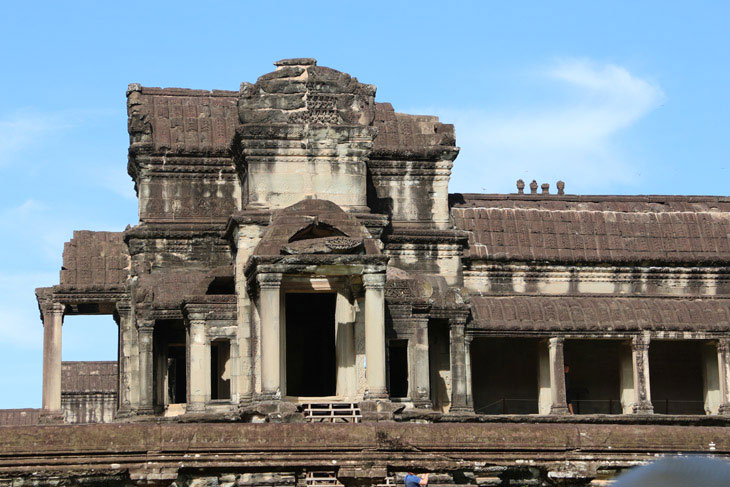
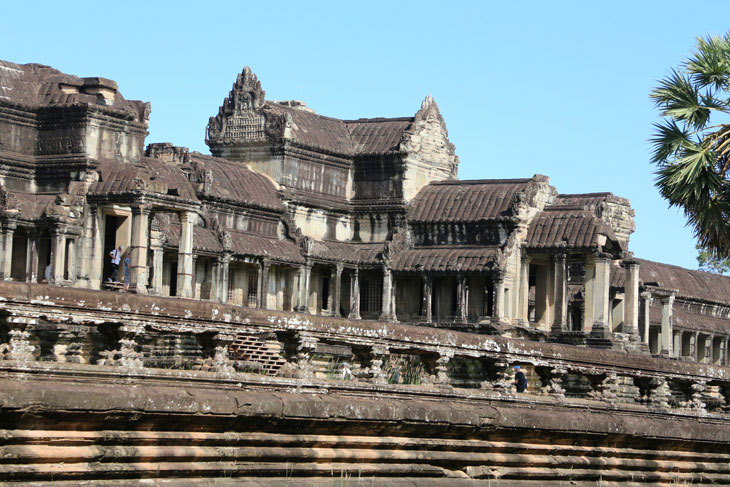
Here are some zoomed in shots of the rooms at the top that you can see on the right side of
the photo above.
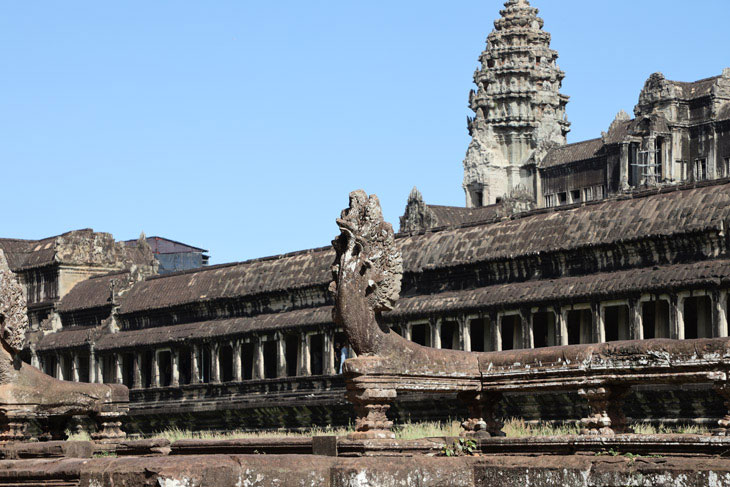
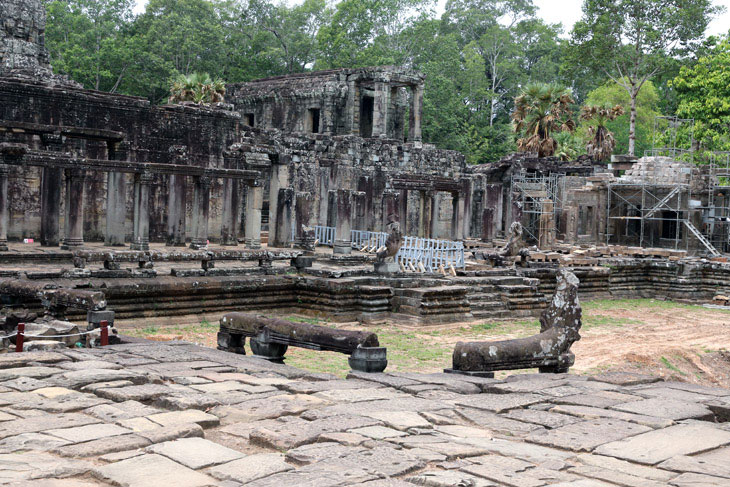
Note the naga in the picture below.
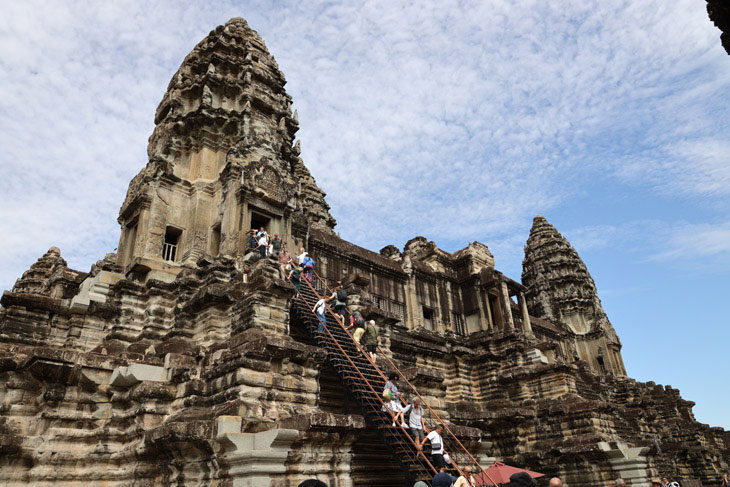
We climbed a short flight of rocky, uneven steps and entered a courtyard where we watched
people climb a steep flight of steps to the upper part of the temple. Most of the group
climbed the steps to view the upper level, but the heat was really starting to affect us so
we had no desire to climb those treacherous steps ourselves.
The steps in picture on the right below are the original temple steps. You are not allowed
to climb them these days.
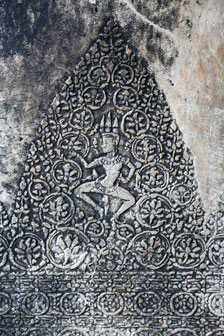
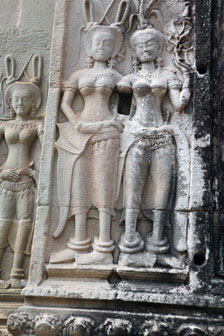
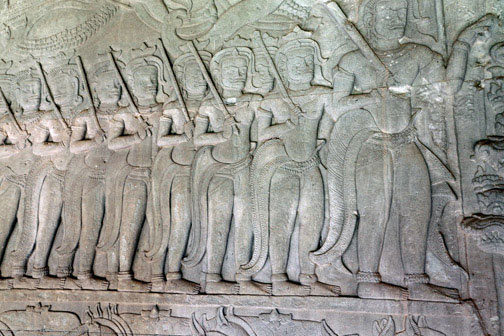
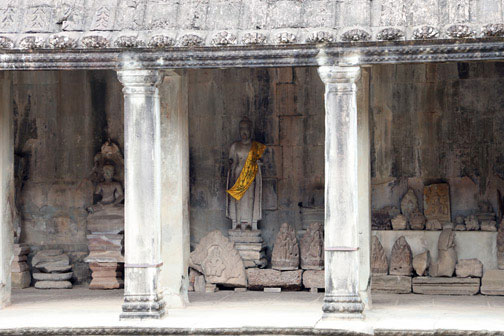
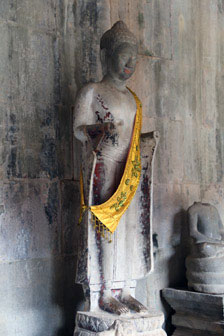
Eventually the rest of the group returned, and we viewed some of
the bas-reliefs and statues in the lower rooms. They reported that the upper rooms we had
missed were much the same.
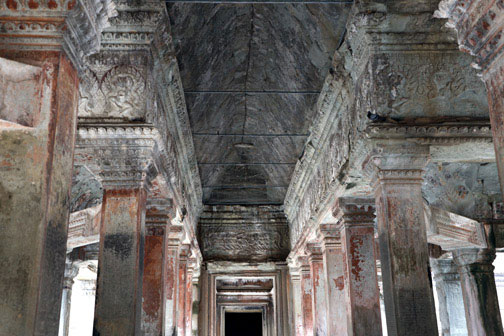
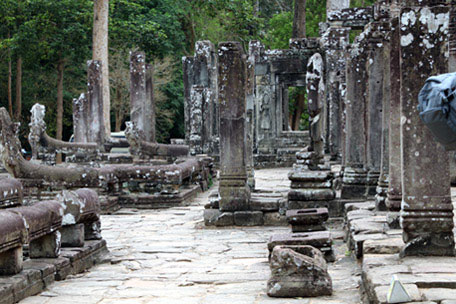
These pictures were taken looking out towards the courtyard from the lower level.
We descended a steep set of wooden steps and exited through what I think is the main entrance.
Although most of the Angkorian temples face the east, Angkor Wat is oriented to the west.
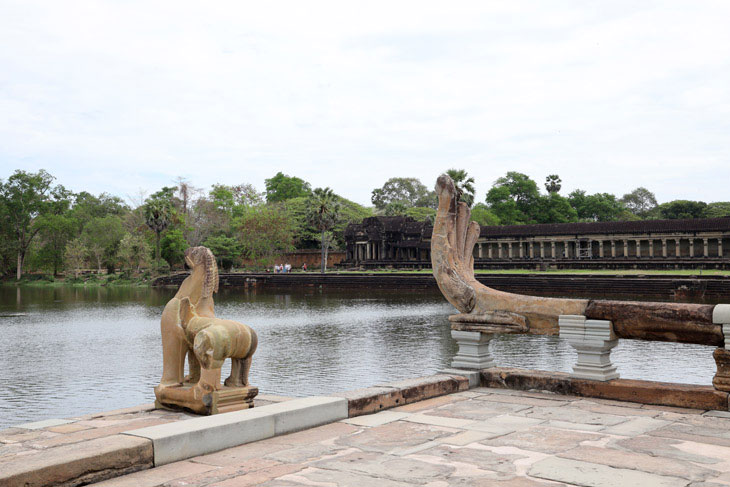
At this point, everyone except Ly looked completely done in by the heat. We walked a short
distance to an area where tourist buses and tuk tuks used to be able to drop people off
and pick them up, but Ly explained that vehicles can no longer stop so close to the temple
because the exhaust fumes were affecting the carvings. Although I was glad to hear that
measures are being taken to protect the site, I was sad that we had to walk further and
I was beginning to feel like I might not make it to the bus. Walt had called the heat
debilitating, and it certainly was.
Finally we arrived at the spot where our bus was waiting, and our driver greeted us with
wet washcloths soaked in ice water which we gratefully accepted.
We recovered, a bit, during the 1/2 hour or so it took to drive to our next destination,
Angkor Thom. Fortunately, the walk this time was short.
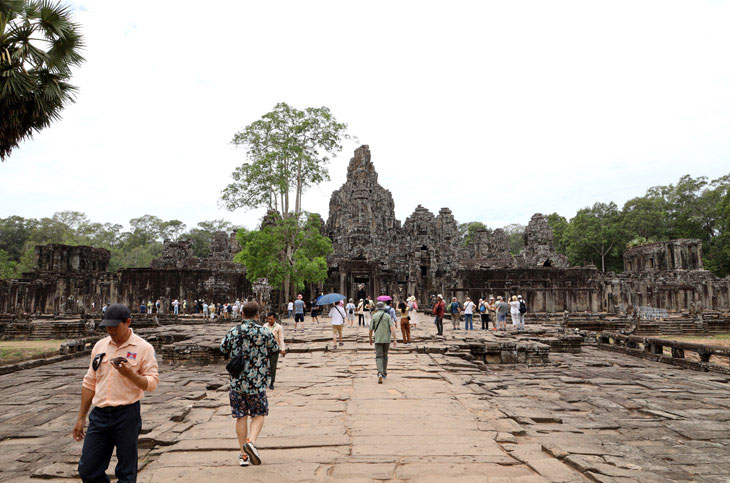
Angkor Thom, or "Great City" was built in the late 12th century. It was the last capital
city of the Khmer Empire. It covers 2225 acres, but we only visited a very small part of it.
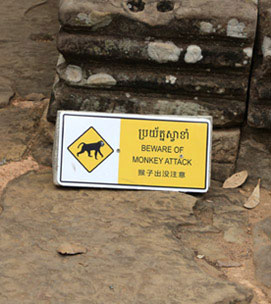
Fortunately, no monkeys arrived to challenge us on this day.
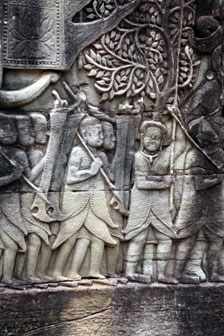
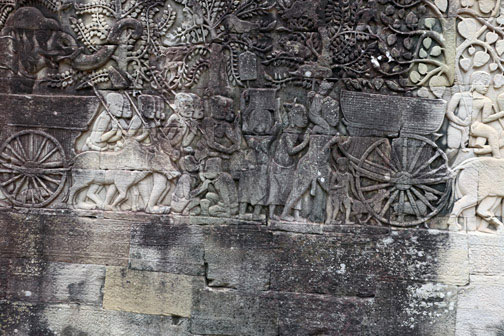
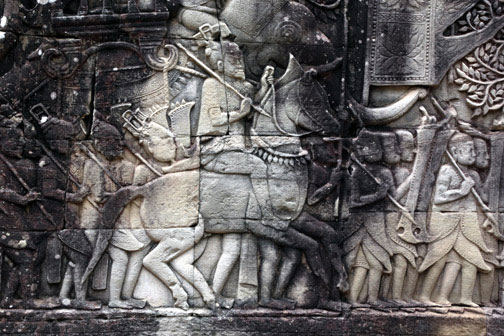
Many of the walls were decorated with bas-reliefs.
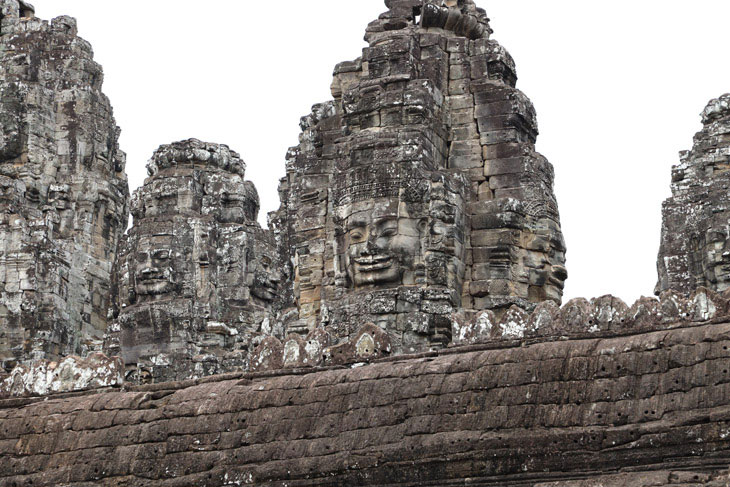
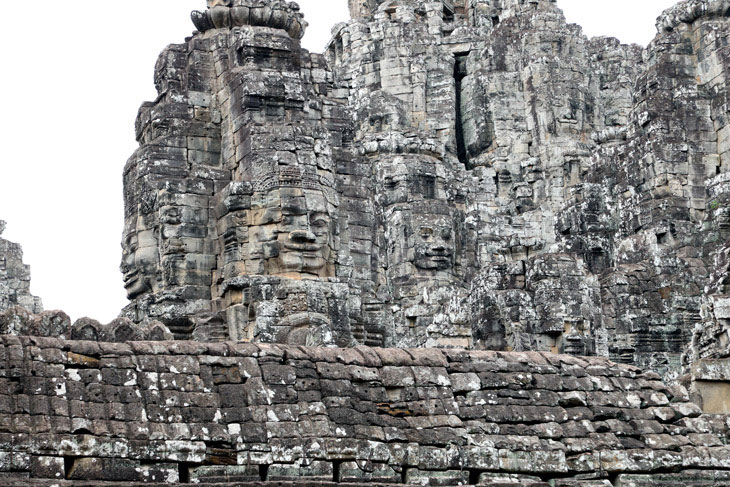
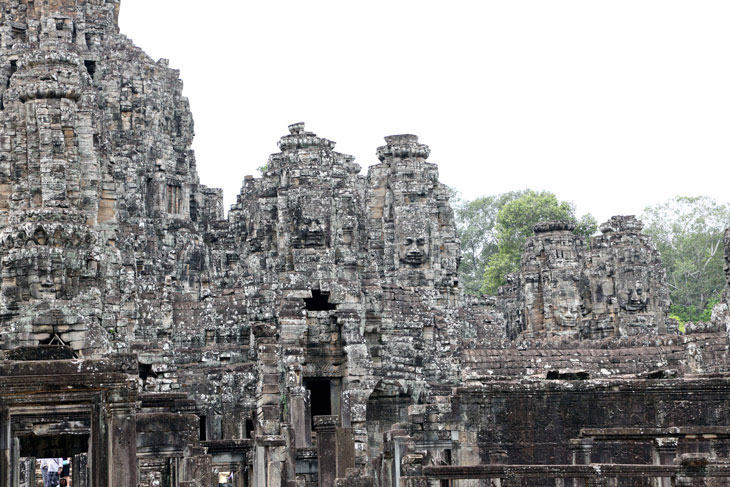
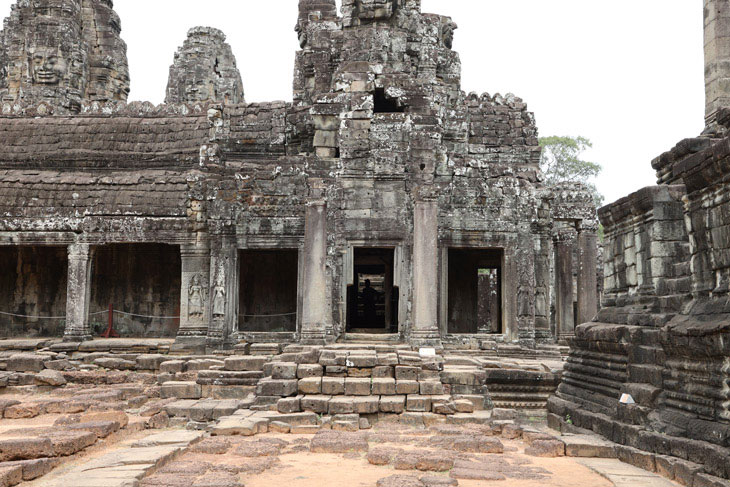
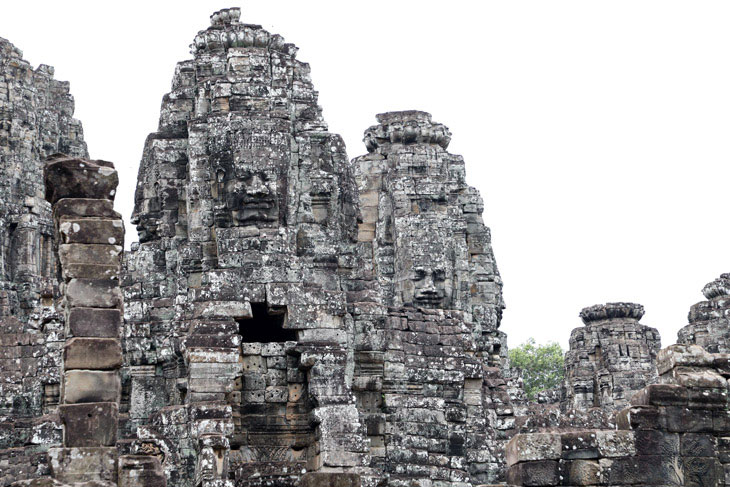
Angkor Thom, however, is best known for the giant stone faces which grace the towers of
the main temple, Banyon. There are 49 towers with 216 faces now, but it is believed that
there were originally more.
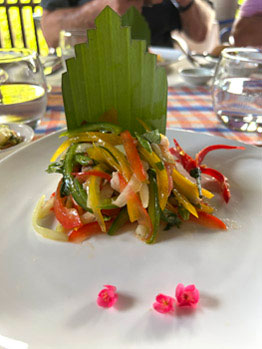
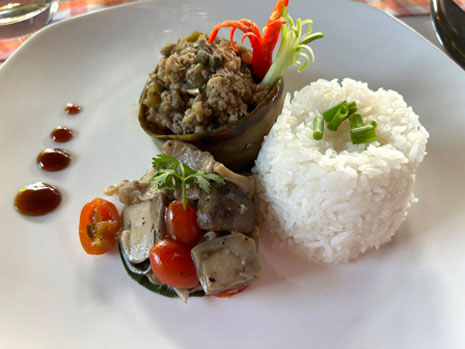
We enjoyed lunch at the Sala Bai Hotel School which trains underprivileged local youth
for jobs in the hospitality industry. Intrepid supports this school and many others like
it.
Then we returned to our lovely resort to enjoy a quiet afternoon lounging by the pool.